Buying your first place in the East Village can feel like choosing between two versions of New York living. Do you go for the classic prewar co-op with lower pricing and more board oversight, or the newer condo with easier ownership and a much higher entry point? If you are trying to make sense of that trade-off, this guide will help you understand what matters most in today’s East Village market and how to move forward with confidence. Let’s dive in.
East Village market basics
The East Village is one of Manhattan’s most distinct apartment markets, with a housing stock that leans heavily prewar and a neighborhood feel that stays active throughout the day and night. According to StreetEasy’s East Village neighborhood page, the area has a median sale price of $920K and a median base rent of $4,650.
That number matters if you are a first-time buyer because it puts the neighborhood close to a key pricing threshold. You can still find homes below $1 million, but once you move into more updated or elevator condo inventory, pricing often rises quickly.
At the time of this research, StreetEasy showed 57 condos and 45 co-ops for sale in the East Village. That mix gives you real choices, but inventory is still limited enough that you need a clear plan before you start touring.
Co-op vs condo in East Village
For most first-time buyers, the biggest question is not whether to buy in the East Village. It is whether a co-op or condo better fits your finances, timeline, and long-term plans.
What a co-op means
In a New York City co-op, you are not buying deeded real estate in the same way you would with a condo. The New York State Attorney General explains that you are buying shares in a corporation and receiving a proprietary lease for the apartment, while monthly maintenance is paid to the co-op.
That structure often creates a lower purchase price than a comparable condo. In the East Village, current co-op listings ranged from roughly $419K to $579K for entry-level studios and one-bedrooms, with larger homes ranging from about $749K to $1.3M, based on current StreetEasy co-op listings.
What a condo means
A condo is usually more straightforward from an ownership and closing standpoint. StreetEasy’s co-op vs condo guide notes that condo boards typically have a right of first refusal, but the purchase process is generally simpler than a co-op board approval.
That flexibility usually comes at a higher cost. In the East Village, current condo inventory included one-bedrooms priced around $1.19M to $1.2M, while many two-bedrooms ranged from about $1.578M to $2.1M, according to StreetEasy’s East Village condo listings.
Quick comparison
| Feature | Co-op | Condo |
|---|---|---|
| Typical entry price | Usually lower | Usually higher |
| Approval process | Board package and interview | Simpler in most cases |
| Ownership structure | Shares plus proprietary lease | Deeded real estate |
| Future rental flexibility | Often more restricted | Usually more flexible |
| Down payment | Often at least 20% | May allow as little as 10% |
If you want the lowest entry point and are comfortable with more scrutiny, a co-op may be the better fit. If you value flexibility and a smoother closing process, a condo may be worth the premium.
What first-time buyers can expect to pay
East Village pricing can look very different depending on the building type. A smaller walk-up co-op may offer a much more approachable starting point than an elevator condo with amenities.
For example, StreetEasy showed a 500-square-foot one-bedroom co-op at 414 East 10th Street listed for $450K and an HDFC one-bedroom at 616 East 9th Street with 639 square feet listed for $579K, based on current East Village co-op inventory. On the condo side, many homes with updated finishes and elevator access were already above the $1M mark, according to current East Village condo listings.
You also need to plan for closing costs. StreetEasy advises budgeting about 4% to 6% of the purchase price, with condos often landing at the higher end because of title insurance and mortgage recording taxes. If your purchase price reaches $1M or more, the mansion tax also becomes part of the math.
Walk-up living vs elevator buildings
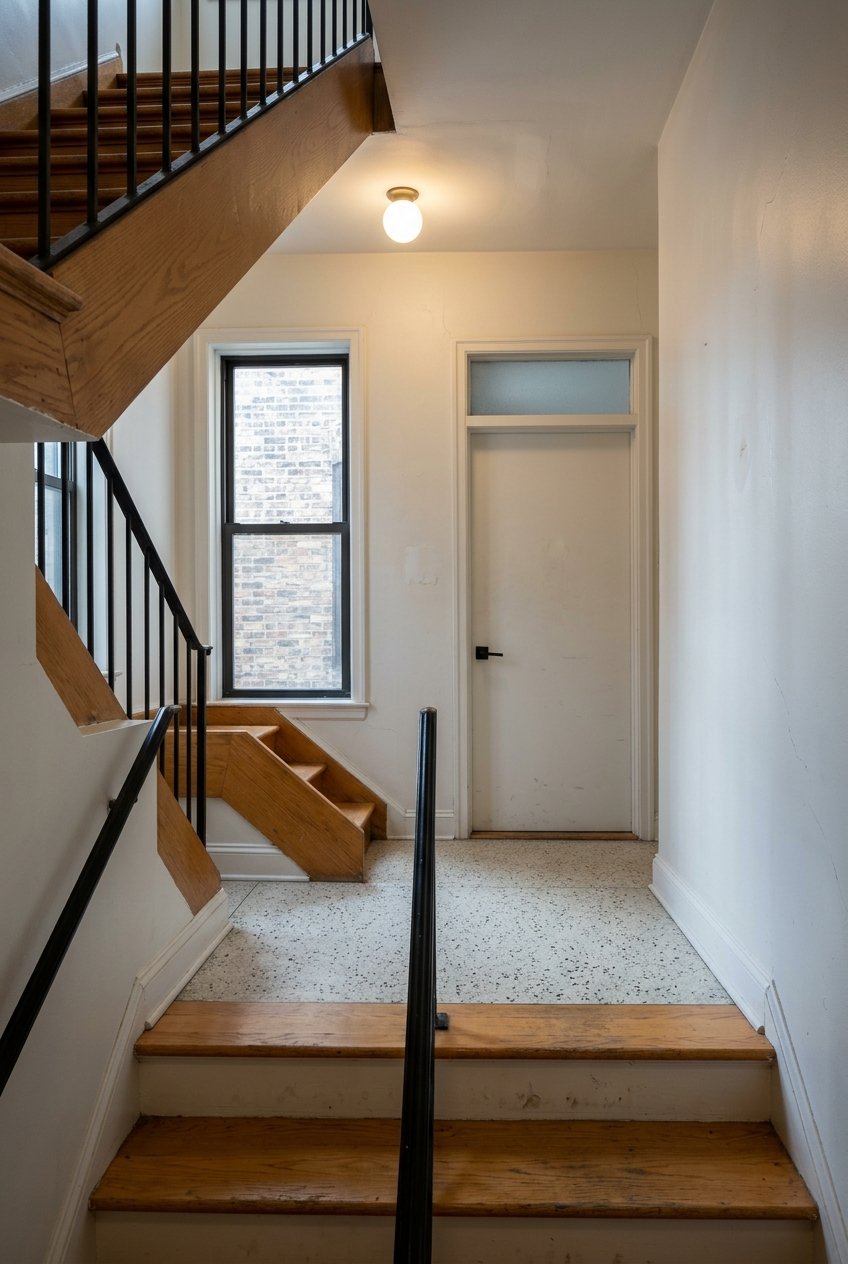
In the East Village, walk-up living is not unusual. It is common. StreetEasy describes the neighborhood as dominated by older prewar walk-ups, with many apartments that are small and may need updates.
That can be a positive if your priorities are charm, price sensitivity, and location. Older walk-up co-ops often give you classic layouts and neighborhood character, but you should also expect trade-offs like stairs, tighter room sizes, and more renovation uncertainty.
Elevator buildings tend to offer a very different experience. They are more likely to be condos, more likely to be newer, and more likely to come with amenities.
A good example is Village Green at 311 East 11th Street, a 2009 LEED Gold condo with elevator service, bike and private storage, a fitness room with lounge, sauna, massage room, 24-hour concierge, and in-unit washer and dryer allowance. Another example is The Avant at 533 East 12th Street, which StreetEasy identifies as a newer elevator condo with virtual-doorman service and one-bedroom pricing around $999K to $1.25M on the same building page.
Older vs newer buildings
It is easy to assume newer is always better, but that is not always true. The better question is whether the building’s condition, systems, and financials make sense for you.
The New York State Attorney General advises buyers to evaluate the facade, roof, elevators, HVAC, windows, electrical, and plumbing systems carefully. The office also recommends reading the offering plan and consulting an attorney before signing a purchase agreement.
Older buildings may offer larger rooms, better proportions, and prewar detail. Newer condos may offer easier daily living, more amenities, and fewer immediate maintenance unknowns. Your job as a buyer is not to chase “old” or “new” as a label. It is to understand the actual condition of the property.
Co-op board process explained
This is where many first-time buyers get surprised. In a co-op, getting your offer accepted is only one part of the process.
According to StreetEasy, co-op buyers usually submit a detailed application, go through a board interview, and may wait several weeks or even months for a final decision. Boards can also reject buyers.
That does not mean co-ops are a bad option. It means you need to be financially organized, responsive, and realistic about timing. If you need a more predictable closing path, a condo may feel much simpler.
HDFC co-ops need extra attention
Some lower-priced East Village co-ops come with additional eligibility rules. One current listing at 616 East 9th Street was described as an HDFC co-op, primary-residence-only, and subject to income caps.
That is important because not every “affordable” listing is open to every buyer. If you are considering an HDFC apartment, you need to confirm the income rules, occupancy requirements, and financing terms before you go too far.
Due diligence that protects you
In the East Village, due diligence matters because so much of the housing stock is older. Even a beautiful apartment can come with building-level issues that affect your monthly costs or future resale.
The Attorney General’s guidance recommends reviewing the full offering plan, board minutes, and the most recent financial report. Those documents can reveal repair needs, recurring defects, major expenses, and whether the building is dealing with issues in a transparent and manageable way.
For older buildings, pay close attention to:
- Roof condition
- Facade work
- Elevator history, if the building has one
- Window replacement history
- Plumbing and electrical upgrades
- Upcoming assessments or capital projects
The goal is not to find a perfect building. The goal is to understand the risks, costs, and timing before you commit.
A smart first-time buyer roadmap
If you want a practical way to approach the East Village market, keep the process simple and disciplined.
1. Get pre-approved early
Know what a lender will support before you start shopping. This helps you focus on realistic options and move faster when the right listing hits the market.
2. Set two budgets
Create one ceiling for purchase price and another for monthly carrying costs. That second number is just as important, especially in a market where ownership costs can vary widely by building type.
3. Choose your lane
Decide whether you are open to a co-op board process or whether condo simplicity is a priority. This one choice can save you a lot of time.
4. Tour at different times
Because StreetEasy describes the East Village as busy around the clock, it helps to visit buildings at different times of day. That gives you a more complete sense of the block and building rhythm.
5. Review the building, not just the apartment
Before making an offer, review the offering plan, financials, board minutes, and any known repair history. A well-priced apartment can become much less attractive if major building work is around the corner.
How to decide what fits you best
If your goal is to buy your first Manhattan home at the lowest possible entry point, a co-op may offer the strongest value in the East Village. If your priority is flexibility, ease of ownership, or a more modern building experience, a condo may be the better match.
There is no universal right answer. The right choice depends on your budget, your tolerance for board review, and how you plan to use the apartment over time.
The East Village offers both classic and contemporary ownership options, but the margin for error is small when inventory is tight and building details matter. If you want a clear, strategic read on which listings are worth your time and which trade-offs are actually worth making, Evan Roth can help you navigate the process with precision from search through closing.
FAQs
What is the difference between a co-op and condo in the East Village?
- A co-op means you buy shares in a corporation and receive a proprietary lease, while a condo is deeded real estate and usually comes with a simpler approval process.
Are East Village co-ops cheaper than East Village condos?
- In general, yes. Current East Village co-op listings include entry-level homes well below $1M, while much of the condo inventory rises above $1M quickly.
Do East Village co-ops require board approval?
- Yes. Co-op purchases in New York City typically require a board package, interview, and formal approval before closing.
Are walk-up buildings common in the East Village?
- Yes. StreetEasy notes that older prewar walk-ups dominate much of the East Village housing stock.
What should a first-time buyer review before buying an East Village apartment?
- You should review the offering plan, financial statements, board minutes, repair history, and any upcoming assessments or capital projects before moving forward.