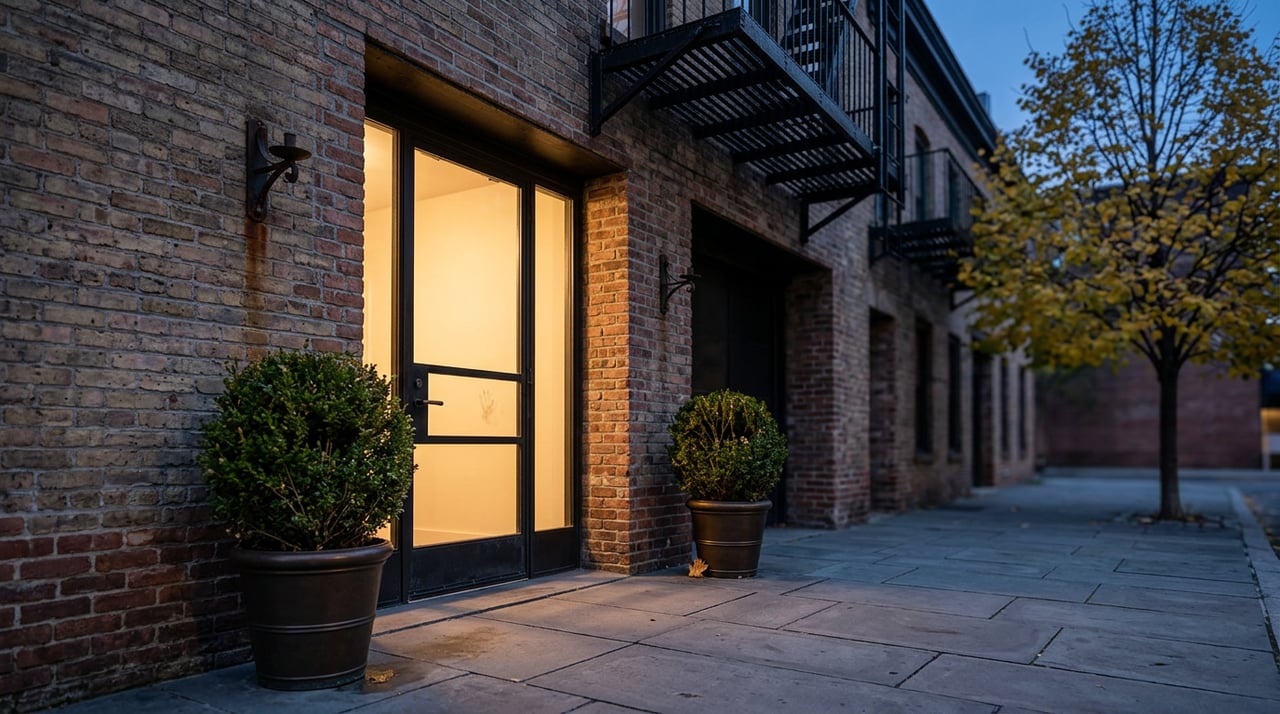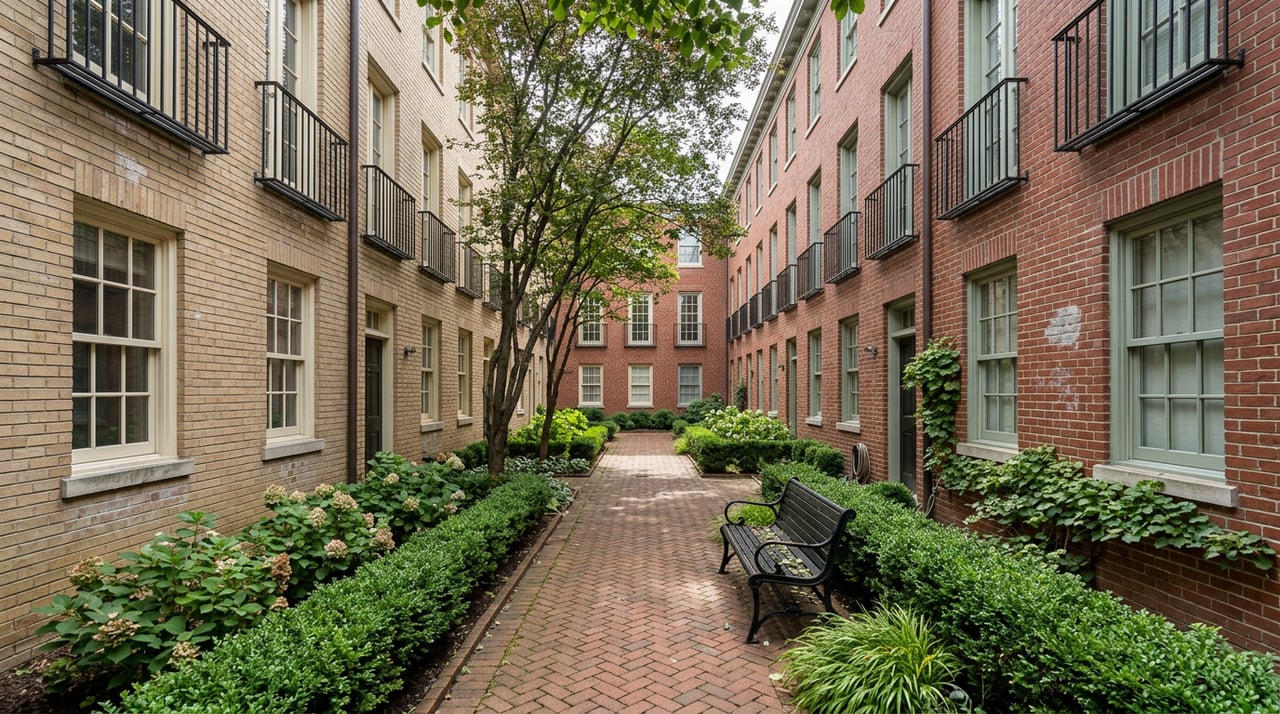
Ask anyone who has never lived below Fulton Street what the Financial District is like on a Saturday, and you will get the same answer: empty. Shuttered delis. A skyline of dark office windows. A neighborhood that exists for exactly forty hours a week and goes dormant the rest of the time. It is the most repeated fact about FiDi, and for eleven months of the year it happens to be roughly true.
Then September arrives, and for six Saturdays it isn't.
The Reputation Is Older Than the Neighborhood You Live In Now
The empty-on-weekends idea did not come from nowhere. It came from decades of FiDi functioning as a pure office district, a place where the population doubled on weekday mornings and evaporated by Friday evening. What that reputation misses is that one block in the middle of it has been ignoring the script since before the district existed in its current form.
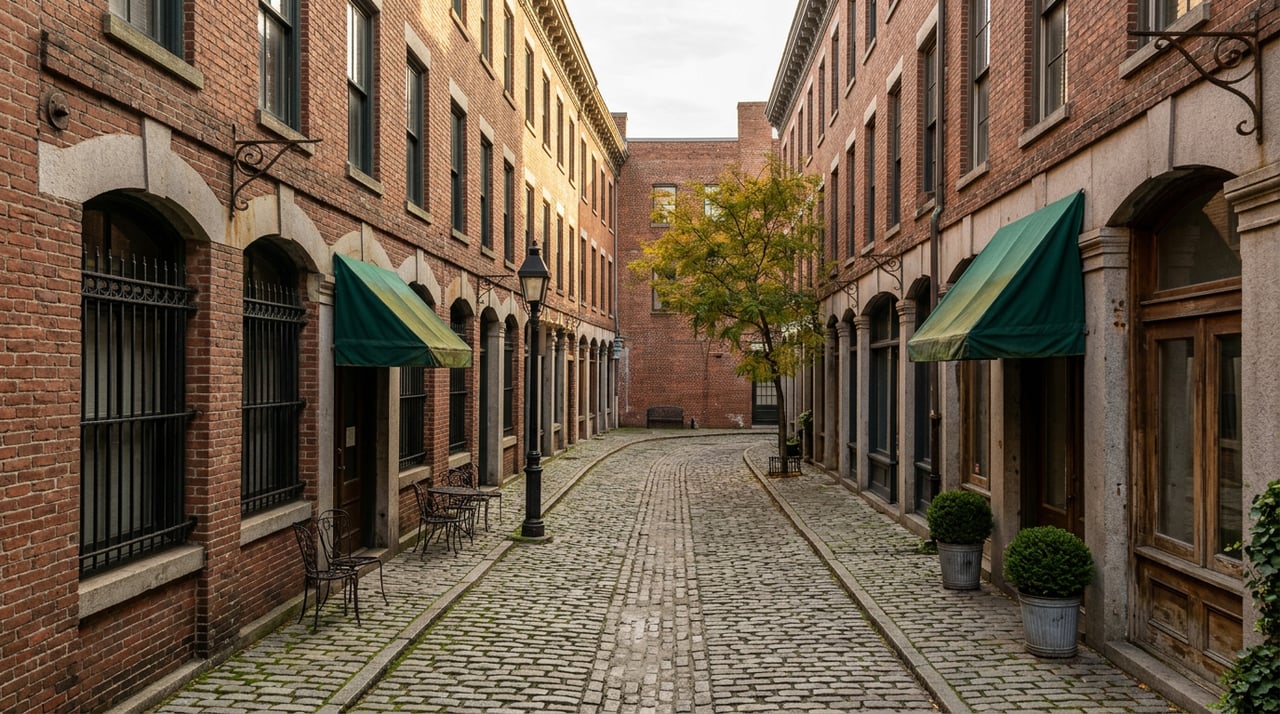
Stone Street is a pedestrian-only cobblestone lane running between 85 Broad Street and Hanover Square, parallel to Pearl and South William. It is one of the oldest streets in Manhattan, and in the 1600s it held the city's first breweries. Part of it was even called Brewer Street, Breuers Straet in the Dutch. The block has been a place where people gather to drink outdoors for roughly four hundred years, which makes the current run of restaurants, from a Mexican cantina to a Cuban spot to an Irish pub to an oyster bar, less a modern discovery than a continuation of the block's original job.
That history matters because it reframes what happens every fall. Stone Street's Oktoberfest is not a neighborhood association inventing a reason to bring foot traffic downtown. It is the oldest function of the street, still running on the same cobblestones.
Six Saturdays, Confirmed
The organizers behind Stone Street have confirmed the 2026 Oktoberfest for six consecutive Saturdays, running from mid-September into late October, noon to 11pm each day. Restaurants along the block push tables into the street, pour German beer by the liter, and sell pretzels and brats alongside their usual menus. There are stein-holding contests at 3, 4, and 5pm each Saturday, a live traditional band on the first two weekends, a DJ on the third, and a free game lounge running basketball, ping pong, and giant Jenga most of the day. Entry costs nothing. You only pay for what you eat and drink.
The exact Saturday list shifts slightly year to year and gets posted at stonestreetnyc.com closer to the date, so it is worth checking before you build a plan around it. What does not shift is the shape of the day. The 2 to 5pm window is the one locals actually use: full energy, still room to move, still possible to hold a conversation across a bench. After 6pm you're on your feet, and by 9pm the block is shoulder to shoulder.
For residents, the geography does the rest of the work. The closest subways, the 2/3 at Wall Street, the 4/5 at Bowling Green or Wall Street, and the J/Z with the 2/3/4/5/A/C at Fulton Street, all sit within a five to eight minute walk. That is a minor detail if you are commuting in for the day. If you live here, it is the difference between walking home with a pretzel and standing on a platform at 11pm hoping for a train back to Midtown.
The Overlap Nobody Puts on a Flyer
Here is the part of the calendar that rarely gets mentioned alongside Oktoberfest. A few blocks north, the Rooftop at Pier 17 runs its own concert season at the Seaport, and this year that calendar keeps going deep into September, with dates on the books through the end of the month.
That creates a short, specific overlap. For the first several Saturdays of Stone Street's run, roughly the back half of September, there is a ticketed show happening at Pier 17 the same evening a free stein-holding contest is happening on Stone Street, an eight-minute walk apart. By the time Stone Street settles into its final few Saturdays in October, the rooftop calendar has wound down and the block has the fall weekend mostly to itself again.
This is not a coincidence worth romanticizing. It is a scheduling fact that happens to hand FiDi residents something the neighborhood does not otherwise offer: two legitimate, different reasons to stay out on a Saturday night within walking distance of home, at the same time of year the rest of the city assumes you have nothing to do down here.
What the Rest of the Year Tells You
Oktoberfest is the biggest of Stone Street's block parties, but it is not the only one. The same stretch of cobblestone throws itself a party for St. Patrick's Day, Cinco de Mayo, Pride Fest, and Oysterfest, with a Fright Fest often following Oktoberfest into the darker part of autumn. None of these get the same attention as the six Saturdays in September and October, but together they describe a block that has run on its own social calendar independent of the office towers around it for longer than most of those towers have existed.
That is the detail that should reshape how you think about the ghost-town label. The emptiness is real on a random February Saturday. It is also incomplete, because it describes an office district's rhythm layered over a much older commercial one that never stopped running its own parties. The neighborhood is not one thing or the other. It is a district that goes quiet most weekends and then, on a schedule set by one four-hundred-year-old block, does not.
The Window Closes Before Halloween
None of this lasts. By late October, Stone Street's final Saturday wraps, the rooftop at Pier 17 has already gone dark for the season, and the Financial District settles back into the quieter version everyone describes. That is precisely why the six weeks in between are worth planning around rather than stumbling into. If you already live down here, you get the advantage every visitor lacks: no need to check a train schedule before the stein contest starts, no argument about leaving before the DJ set to make the last train, just a short walk home whenever you are ready.
The Financial District's reputation as an after-hours ghost town is not wrong so much as it is dated by exactly one block and six Saturdays a year. Knowing that difference, and knowing it early enough to actually use it, is the kind of neighborhood fluency that only comes from paying attention to the calendar rather than the stereotype.
If the way a neighborhood actually behaves, not just what it looks like on a spec sheet, is part of how you think about where you live, that is exactly the kind of read Evan Roth brings to every conversation about the Financial District. Schedule a Private Consultation when you are ready to talk about what living here really involves, block by block and season by season.